


11mph
Speed at which pediatric trauma centers have recorded children ejected from golf carts during turns. Slower than most neighborhood loops.
Pediatric trauma-center data
In a turn, a small body swings over the side bar. The bar becomes the pivot, and the head, the heaviest part of a toddler, goes over first. Pediatric trauma records show it happening at speeds as low as 11 mph. That is slower than most neighborhood loops.
Mechanism described in peer-reviewed golf-cart injury studies (National Library of Medicine / PMC) and pediatric trauma-center data. Full citations available on request.
The neighborhood treats caution like a personality flaw. The injury literature treats it like the correct read of the physics.
Speed at which pediatric trauma centers have recorded children ejected from golf carts during turns. Slower than most neighborhood loops.
Share of reported pediatric golf-cart injury cases that involve the head or neck. The pivot sends the head over first.
Rise in golf-cart injuries over a 17-year period: roughly 148,000 emergency visits, about a third of them children under 16.
Figures summarized from published golf-cart injury research and U.S. emergency-department data. They describe the category, not this product, and no harness removes the need for an attentive driver.
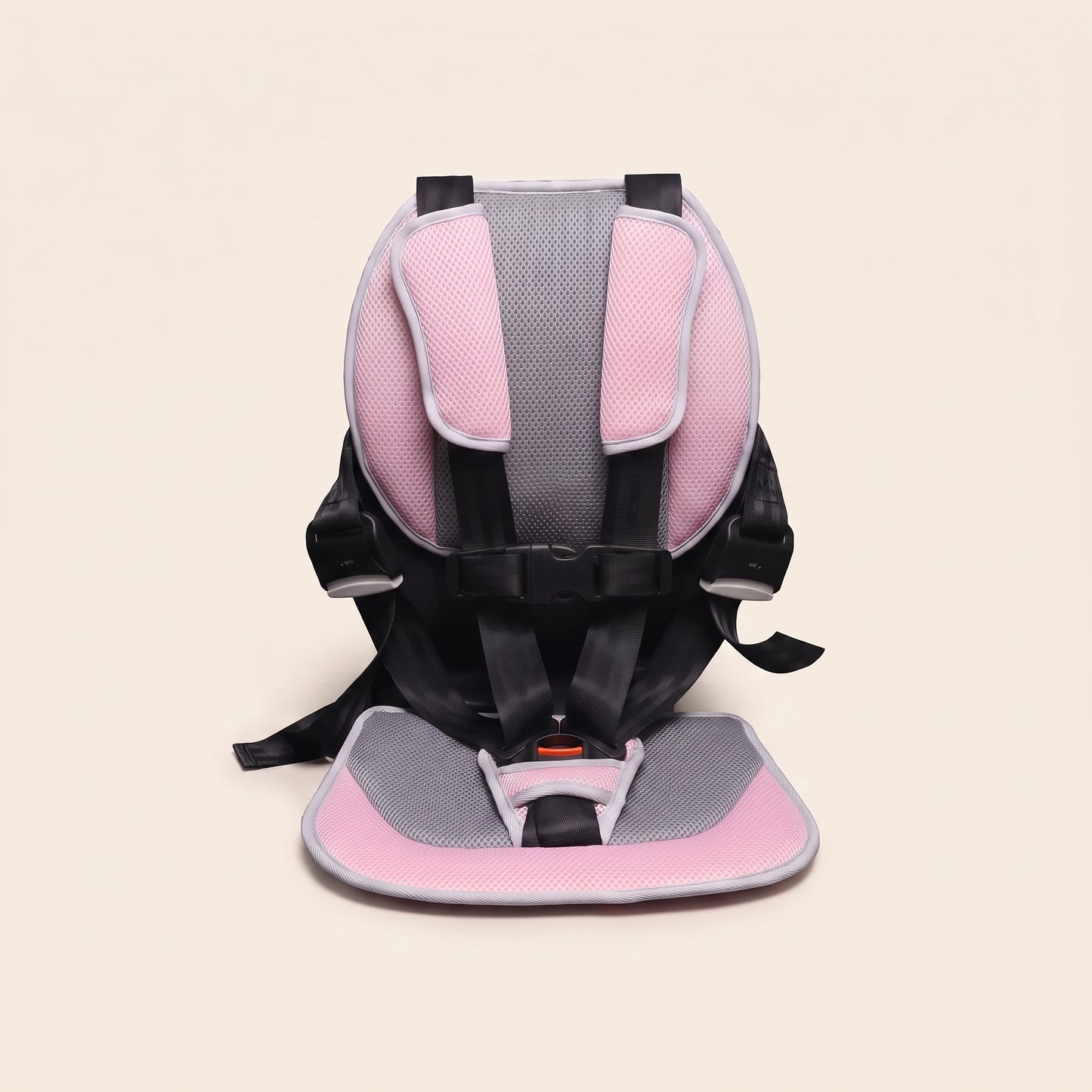
There are exactly two structures on a small child built to take force: the shoulders and the pelvis. Every strap on CubRide exists to route force into one of them.

In this category you've earned the right to be skeptical. So here is the stitching, the buckle and the anchors, up close.


Nothing drilled, nothing modified. It moves between your cart, a rental and the club's fleet, and it never gives a starter anything to object to.

Set the padded seat on the bench and pass the anchor straps around the seat back.

Pull the anchor straps tight by hand until the seat doesn't shift when you tug it. No tools, nothing drilled.

Buckle the five straps, slide the chest clip to armpit level and snug the adjusters. Then go.
Every alternative fails at the same invisible point: none of them addresses what actually ejects a child.
Swipe to compare
You've read the fine print on every option out there. Here is ours, up front.
No stock photos, no invented names. Every story here came from a customer who gave us permission to share it.
We added the harness before our neighborhood rides, and it keeps our daughter comfortably seated without making her feel strapped down or restricted.
Our son used to slide around on turns, but this harness gives him a secure fit and makes short family cart trips much easier.
Installation took just a few minutes, and the harness feels sturdy enough for daily campground rides while staying comfortable for our four-year-old.


